Bones Of The Female Body
Bones And Joints Explained

Bones Of The Female Body |
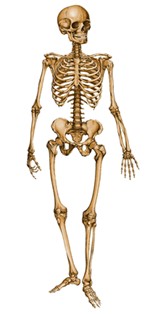 |
Bones In WomenContents
• Fun Bone Facts
|
Laughing or coughing puts more pressure on the spine than standing or walking (which is why someone can put their back out by laughing or coughing). |
|
|
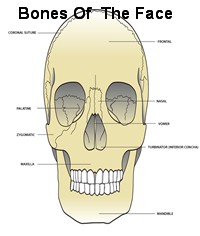
The Skull Also called the cranium, the skull is the hard casing that protects your brain. |
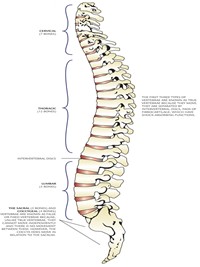 Click to enlarge |
The Backbone (also known as spine or vetebral column) This bone extends from the base of the skull down to the hips. |
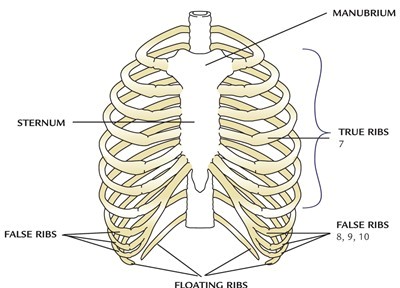
Ribcage
No, men and women have the same number of ribs (it's just a myth that women have one less). There are 24 ribs - or two sets of 12. Each pair of ribs is attached to the spine (vertebrae) in the back. There are 3 types of ribs: |
|
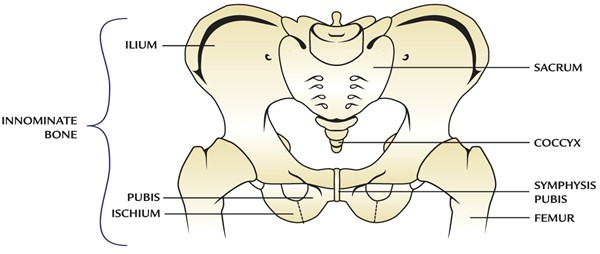
Pelvic Bone
The pelvis of women is wider and more shallow than men's. |
|
What Are Postural Deformities? The spine has two natural curves: an inward curve in the lower back (lumbar area: put your hand there and try it) and a slight outward curve in the upper back (the thoracic area). In certain cases, the spine's natural curves become exaggerated, causing unnatural curves, or postural deformities. There are three causes for these: What do postural deformities look like? |
|
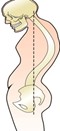 Kyphosis Exaggerated outward curve of the cervical spine. The fictional Hunchback of Notre Dame is probably the most famous of all sufferers of kyphosis! |
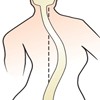 Scoliosis A sideway curve of the spine. |
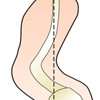 Lordosis An exaggerated inward curve which forces the stomach forward. |
A bone fracture is another name for a broken bone. Fractures can be caused by either injury or disease. There are 6 main types: |
||
Diseases And Conditions Of The Bones Arthritis Ankylosing spondylitis Carpal Tunnel Syndrome Cervical Spondylitis Gout Osteoarthritis Rheumatoid Arthritis (type of poly-arthritis) Loss Of Limb Rickets Osteogenesis Imperfecta Osteoporosis Paget's Disease Scleroderma Lupus Slipped Disc (also called herniated disc and prolapsed disc) Stress Synovitis Whiplash For a complete list see Bone And Joint Problems |
||
What The Skeletal System Links To Muscles Of The Body: Muscles always cross joints and thus rely on the framework of the skeleton for leverage and movement. |
||
 Other Useful Guides Other Useful Guides
Recommend Health Screenings For Women: Your personal DIY tests! Back To Homepage: Womens Health Advice |
WOMENS HEALTH ADVICE: ABOUT BONES AND JOINTS |
 A skeleton is the framework of bones that supports the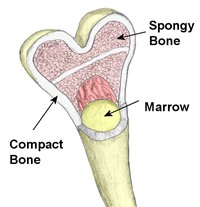

.gif)